Condition
Net overseas migration
How fast is migration adding to demand for housing and services?
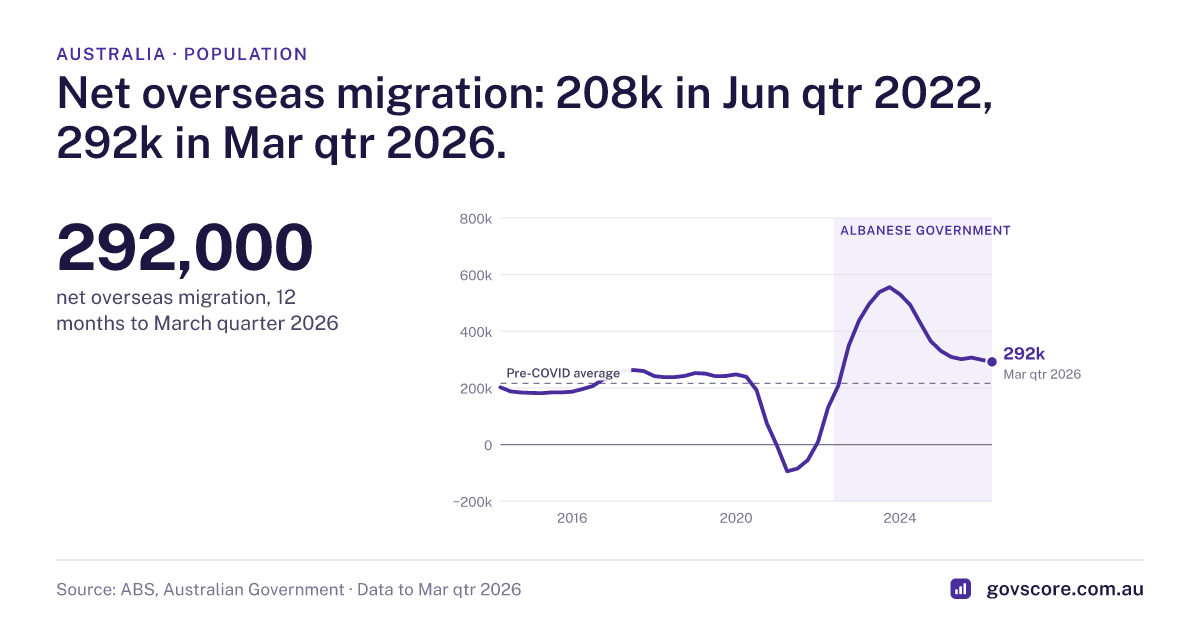
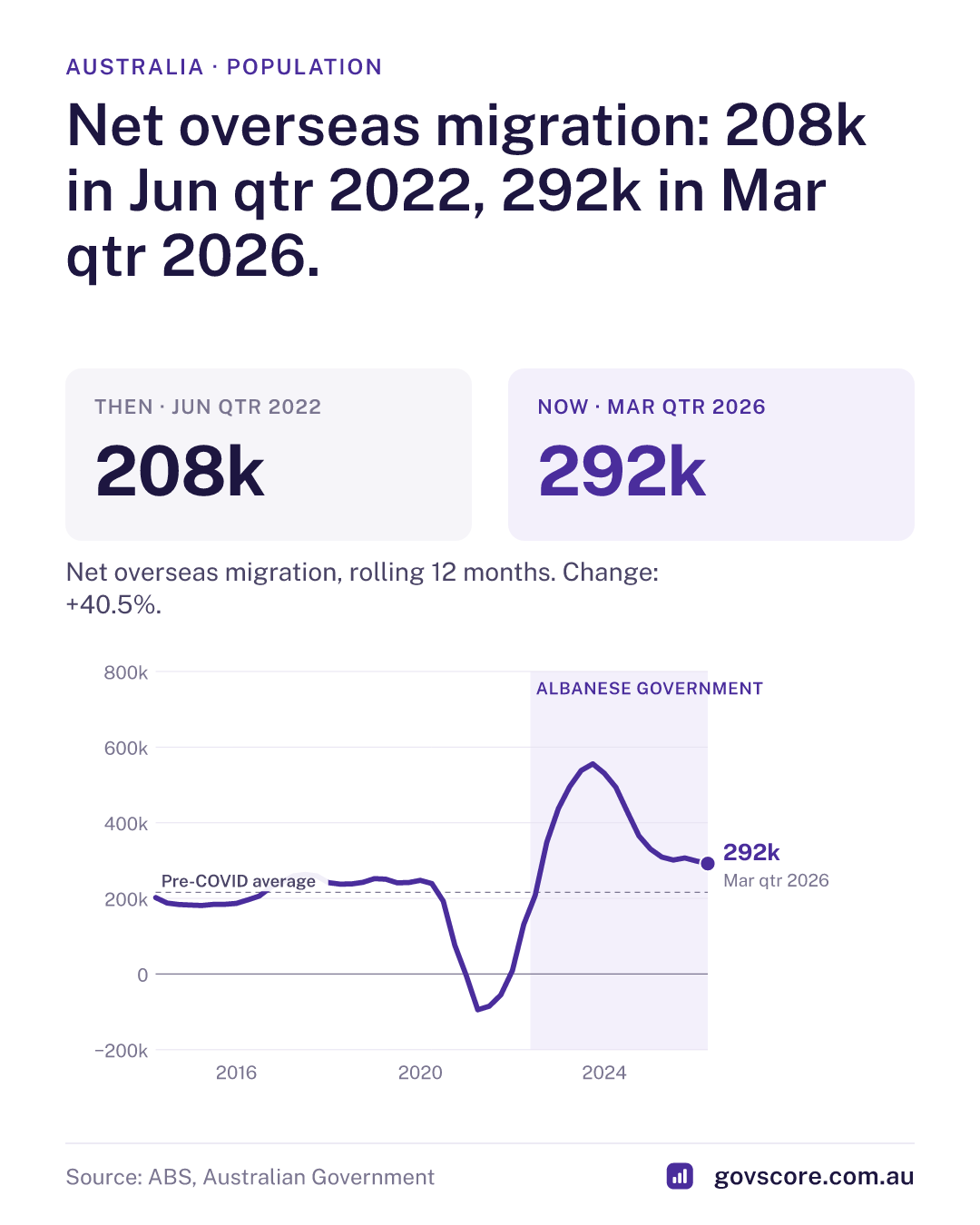
Net overseas migration: 208k in Jun qtr 2022, 292k in Mar qtr 2026.
- Latest
- 292,000
- Since the government took office
- Higher+40.5%
- Over the past year
- Lower−5.6%
Net overseas migration, rolling 12 months
- Original
- Rolling 12 months
What this is
Net overseas migration is the number of people arriving to live in Australia (for at least 12 of the next 16 months), minus residents leaving on the same basis. It includes students, workers and permanent migrants. ABS data, summed over the latest 12 months.
Why it matters
Migration drives population growth, which adds to demand for housing, roads, hospitals and schools. We compare it with the pre-COVID average and with how many homes are being built.
More from the figures
- 1,513,200 people have been added through net overseas migration since July 2022.
- In the year to March quarter 2026 Australia's population grew by 392,800 while 173,404 new homes were completed: 2.3 new residents for every new home.
- Net overseas migration was 538,341 in 2022-23 and 429,162 in 2023-24. In 2024-25 it was 302,184, about 52,000 above the 250,000 the government forecast in December 2023.
How it’s calculated
Sum of the latest four quarters of ABS net overseas migration. Pre-COVID benchmark is the average of financial-year totals 2009-10 to 2018-19. Population growth is the change in estimated resident population over the same 12 months.