Context
Prices vs wages since the election
Have wages kept up with the cost of essentials?
Prices vs wages since the election.
- Latest
- 6
- Since the government took office
- Over the past year
Prices vs wages since the election
- Original
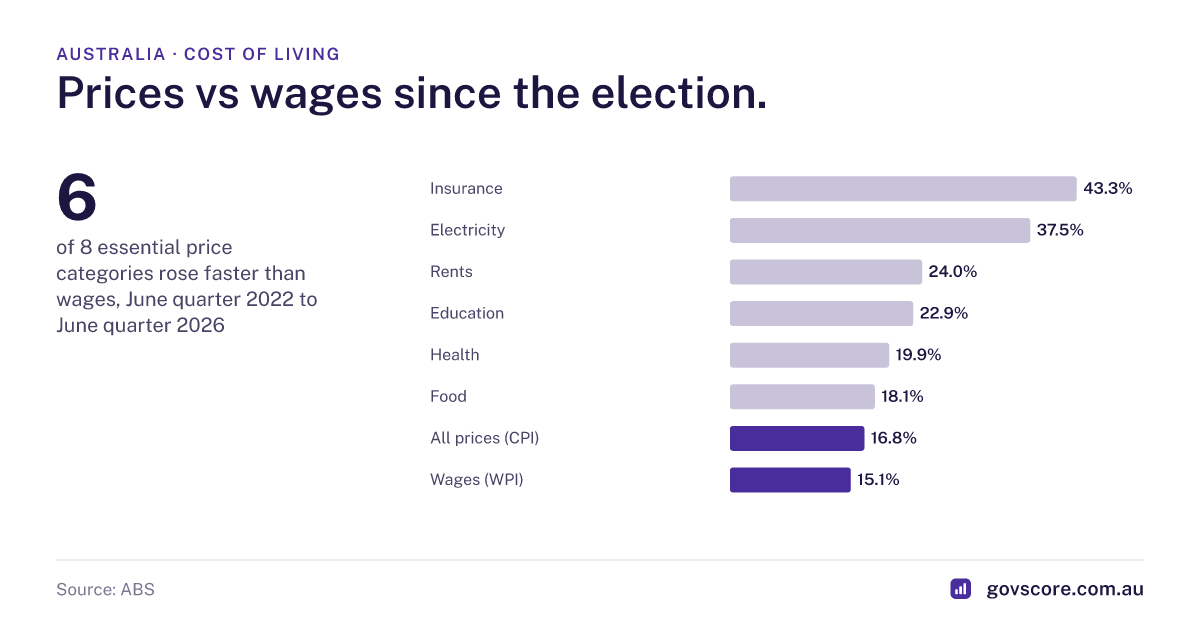
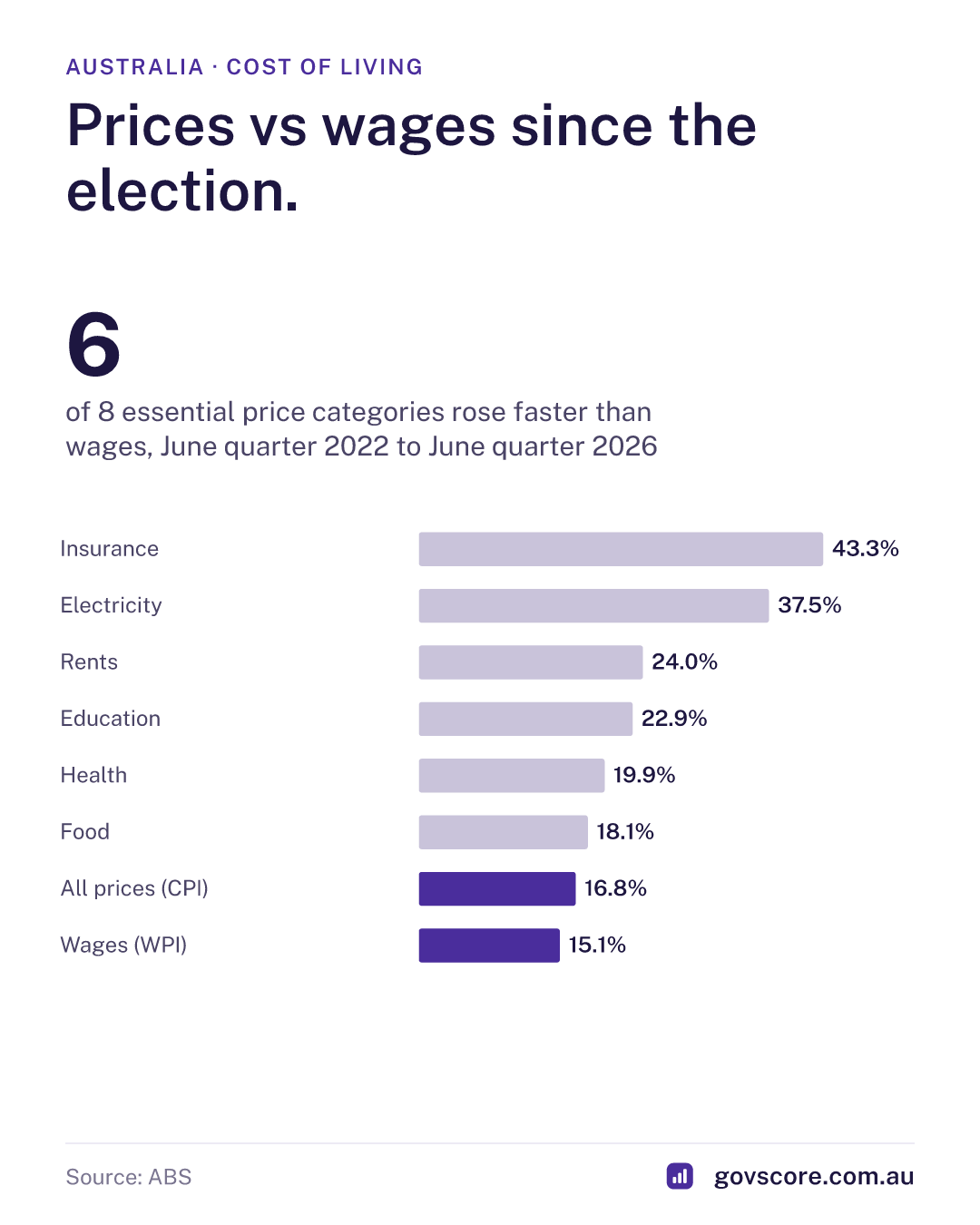
- Insurance43.3%
- Electricity37.5%
- Rents24.0%
- Education22.9%
- Health19.9%
- Food18.1%
- All prices (CPI)16.8%
- Wages (WPI)15.1%
- Child care14.1%
- Petrol & fuel−0.6%
- Wages (black line)
- All prices
- Essential items
What this is
This compares how much the prices of everyday essentials have risen since mid-2022 with how much wages have risen. Wages are measured by the ABS Wage Price Index, which tracks pay for the same jobs over time.
Why it matters
If the things you must buy rise faster than your pay, you are worse off even if your pay rose. It shows where the squeeze on households is coming from.
More from the figures
- Wages (Wage Price Index) are up 15.1%; overall prices are up 16.8%.
- Rising faster than wages: Insurance, Electricity, Rents, Education, Health, Food.
- The ABS counts government energy bill rebates as a cut in electricity prices while they are paid, so the electricity figure is after taxpayer-funded rebates.
How it’s calculated
Percentage change in each ABS CPI expenditure-class index and the Wage Price Index between the June quarter 2022 and the latest quarter available for all series.