Condition
Real wages: private vs public sector
Can a worker's pay buy more than it could when the government took office, and has the private sector done as well as government employees?
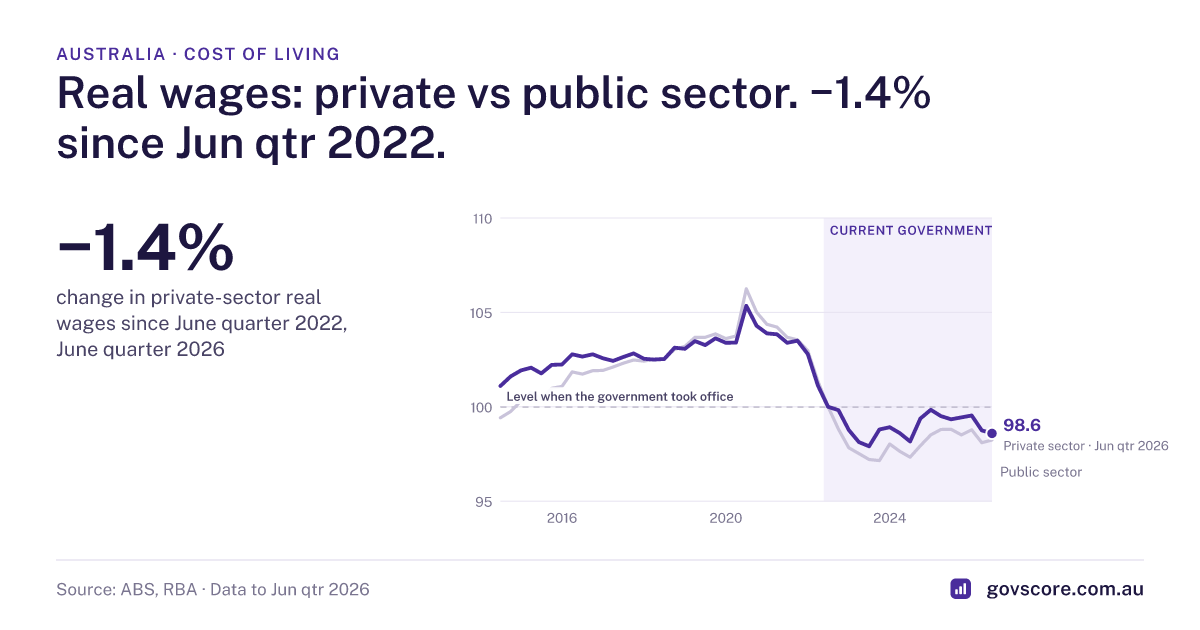
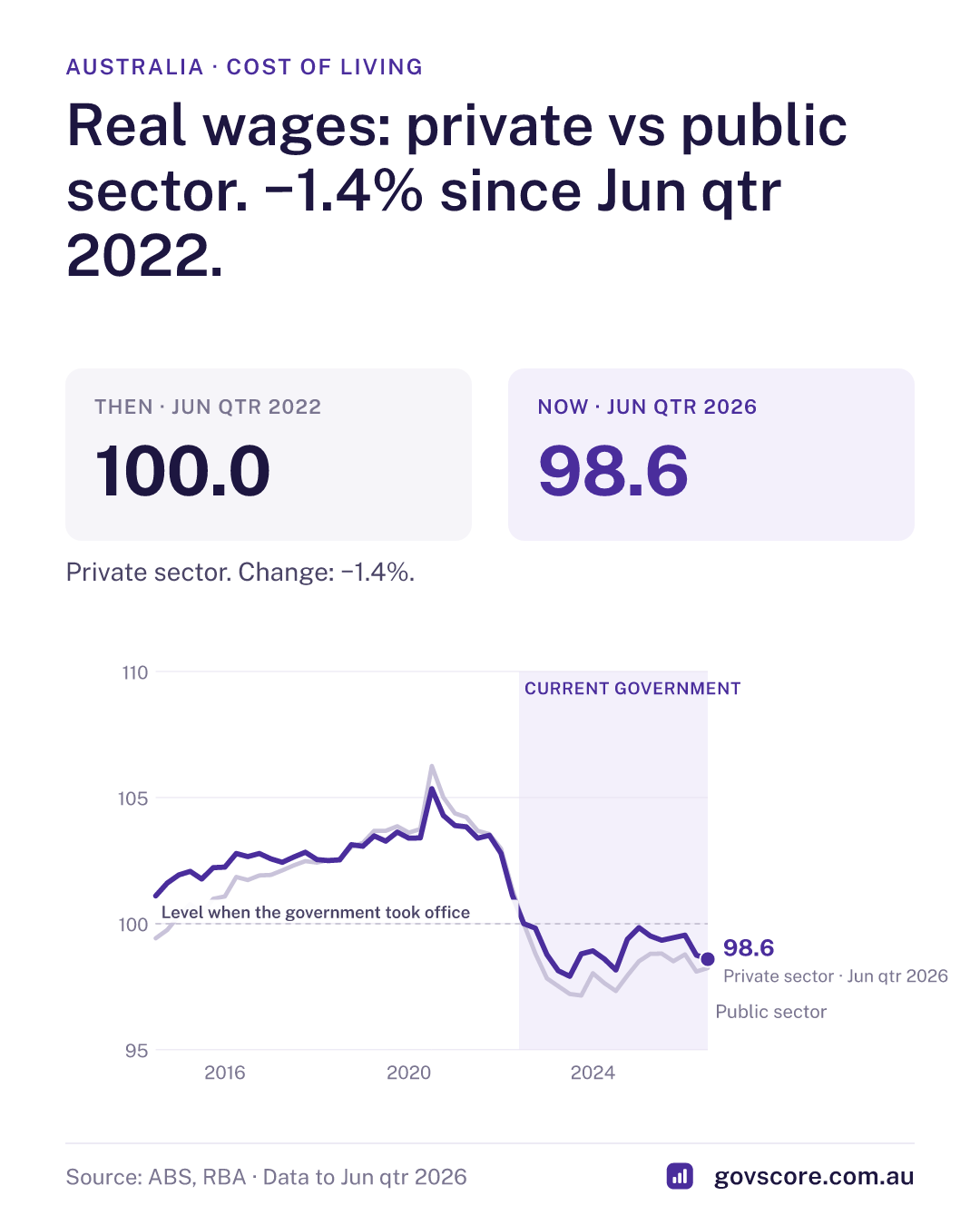
Real wages: private vs public sector. −1.4% since Jun qtr 2022.
- Latest
- −1.4%
- Since the government took office
- Worse−1.4%
- Over the past year
- little changed−0.8%
Real wages: private vs public sector
- Original
- Real (after inflation)
- Private sector
- Public sector
What this is
'Real' wages are wages adjusted for inflation: what your pay can actually buy. We divide the Wage Price Index by the Consumer Price Index and set mid-2022 to 100. Below 100 means pay buys less than it did then. Private-sector and public-sector workers are shown separately.
Why it matters
A pay rise is only a real gain if it beats inflation. The sector split shows whether workers in private business have fared differently from government employees.
More from the figures
- Private sector: real wages −1.4%. Public sector: −1.8%. All workers: −1.5%.
- Latest year: private wages +3.1%, public wages +3.4%, prices +3.9%. Real wage growth is private −0.8 and public −0.5 percentage points.
- Across all workers, wages grew more slowly than prices in 9 of the 17 quarters since the government took office.
- The Treasurer's own release on 19 August 2026 acknowledged real wages fell by 0.8% over the year (unrounded).
How it’s calculated
ABS Wage Price Index (by sector) divided by the Consumer Price Index, rebased so the June quarter 2022 = 100. A value below 100 means pay buys less than it did then. Year-ended wage growth by sector from RBA Table H4.