Condition
Budget deficits
Is the government living within its means?
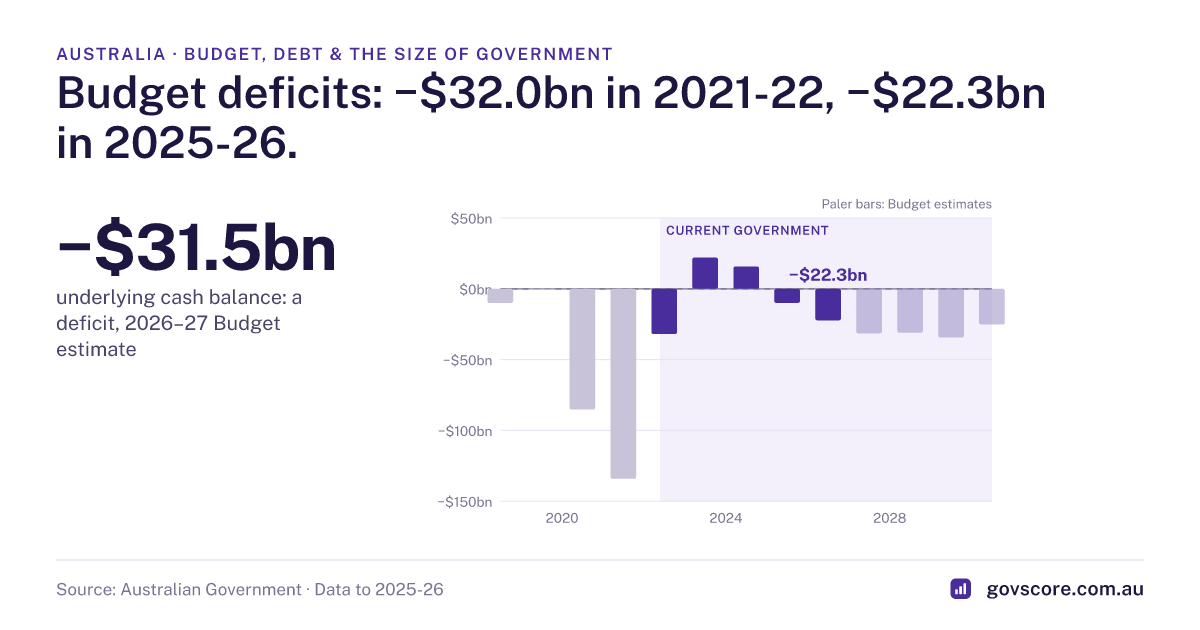
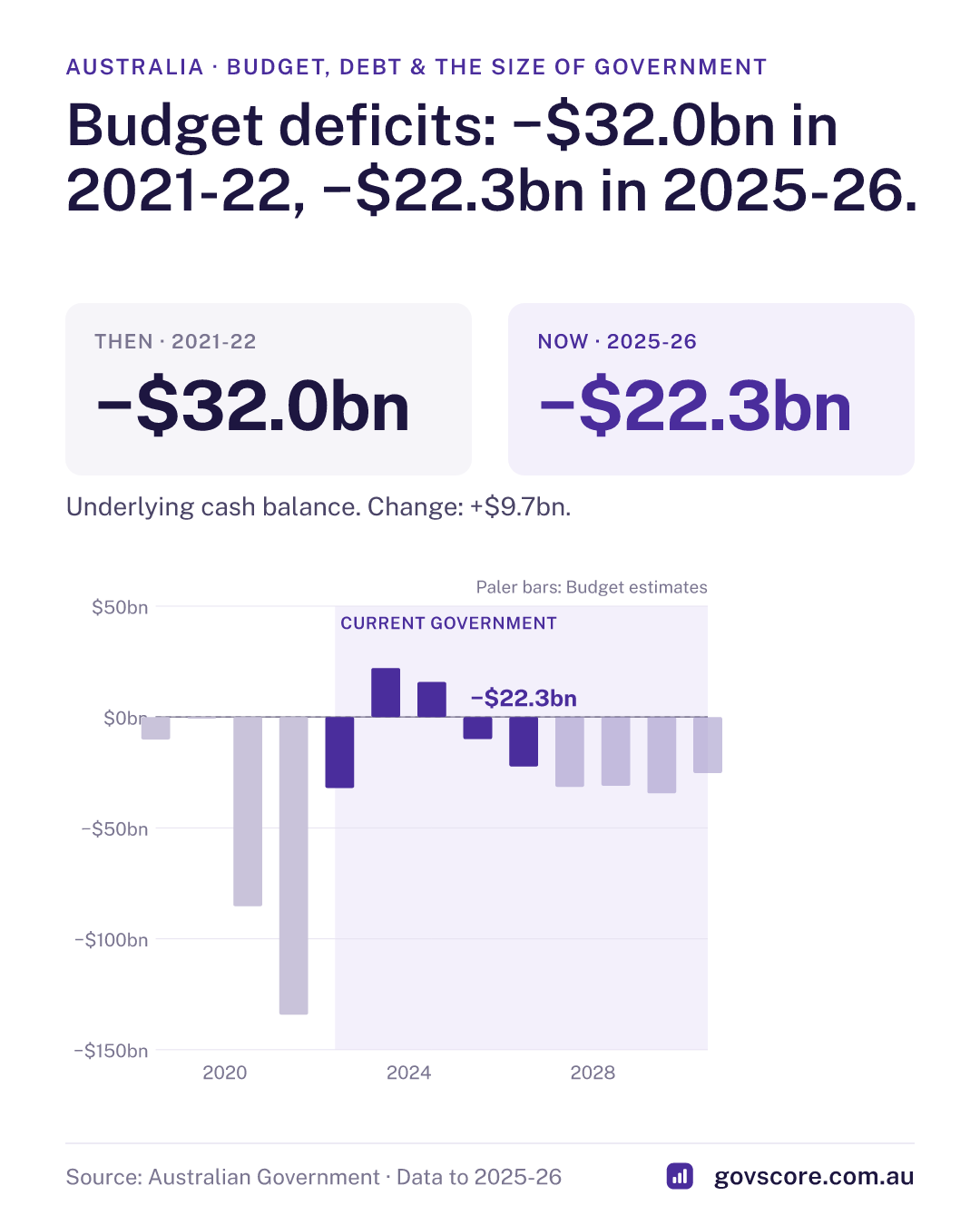
Budget deficits: −$32.0bn in 2021-22, −$22.3bn in 2025-26.
- Latest (Budget estimate)
- −$31.5bn
- Since the government took office
- Better+$9.7bn
- Over the past year
- Worse−$12.3bn
Underlying cash balance ($ billion)
- Nominal $
- Underlying cash balance
What this is
The underlying cash balance is the Commonwealth's headline budget result: cash receipts minus cash payments, excluding the Future Fund's investment earnings. A negative number is a deficit.
Why it matters
Deficits are funded by borrowing, which adds to debt and interest costs. Deficit spending also adds to demand at a time when the Reserve Bank is trying to bring inflation down.
More from the figures
- The budget recorded surpluses in 2022-23 (+$22.1 billion) and 2023-24 (+$15.8 billion), then returned to deficit in 2024-25 (-$10.0 billion) and 2025-26 (-$22.3 billion, 0.8% of GDP, per the Final Budget Outcome; the Budget had estimated -$28.3 billion).
- The 2026-27 Budget forecasts a deficit in every remaining year of the forward estimates: -$31.5b, -$31.0b, -$34.4b and -$25.3b from 2026-27 to 2029-30.
- Tax receipts are forecast at 23.8% of GDP in 2026-27, up from 23.0% in 2021-22. The tax take is higher as a share of the economy, but payments have risen faster (see Government spending).
How it’s calculated
Underlying cash balance (general government sector), Budget Paper No. 1 2026-27, Table 11.1, 1970-71 to 2029-30. 2025-26 is the actual from the Final Budget Outcome 2025-26; later years are estimates.